
【Program Report】Asia Summer Program 2026
In September 2026, we held our Asia Summer Program in Indonesia for the first time in
seven years, following the previous program in 2019.
Indonesia is a country experiencing rapid development. While its economy continues to grow
against the backdrop of a young and growing population, the country also faces a range of
social challenges, including environmental pollution, waste management, and disaster risks.
We chose Indonesia as the destination for this program because we believed that the
coexistence of challenges and opportunities in the country would offer valuable insights for
students at Beyond Tomorrow as they aspire to become global leaders.
The theme of the students’ final presentation was:
“How can we solve the environmental problems of the Citarum River as
entrepreneurs?”
Focusing on the Citarum River, which faces serious environmental challenges, the students
learned about its realities firsthand and explored potential solutions from an entrepreneurial
perspective.
By setting “entrepreneurship” as the theme, we hoped the students would consider
approaches to social issues from the perspectives of social impact and sustainability.
Over the course of six days, the students engaged seriously with social issues in a foreign
country, asking themselves not only, “What would I like to try?” but also, “What would it take
to genuinely create change in society?” as young people aspiring to become global leaders.
This program was made possible through a grant from the JKA Foundation and generous
support received through our crowdfunding campaign. We would like to take this opportunity
to once again express our sincere gratitude to everyone who supported the program.
【Program Overview】
Program Period:
・Pre-departure training in Tokyo: September 2, 2026 (Wed.)
・Indonesia Program: September 3 (Thu.) – September 7 (Mon.), 2026
Participants: 8 Beyond Tomorrow scholarship recipients from the 2022–2026 cohorts (university freshmen through first-year graduate students)
Locations: Indonesia (Jakarta / Bandung)
Organized by: Global Fund for Education Assistance
Supported by: JKA Foundation / Supporters of the crowdfunding campaign
Sponsored by: Green Core Co., Ltd.
In cooperation with: Fidelity Investments Japan
【Online Pre-Departure Training】
From July through August, we held three online training sessions.
With the goal of “researching everything we could in Japan and developing hypotheses
before traveling to Indonesia,” the students spent an intensive period preparing for the
program.
As they prepared to engage with environmental issues in another country, they researched
Japan’s history of pollution and the approaches taken to address it. They also studied
solutions implemented in countries other than Indonesia to broaden their range of possible
approaches. Through these activities, they explored the issue from a variety of perspectives
and deepened their thinking.

【Pre-Departure Training in Tokyo】
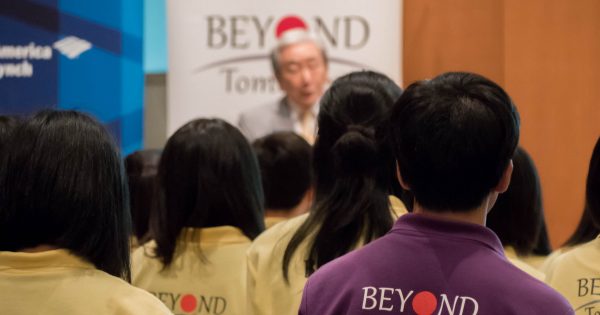
We held the final pre-departure training at the office of Fidelity Investments Japan.
This was the first time the students met one another in person. Although they initially
appeared somewhat nervous, it was impressive to see them gradually open up to one
another and become increasingly engaged as the training progressed.
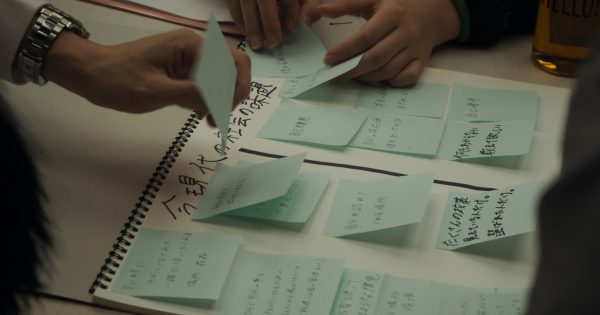
The training included discussions related to the program theme, English conversation
practice with Fidelity Investments Japan volunteers, and talks by guest speakers.
For a panel discussion, we welcomed three guests from NPO green bird, which works on
community development through activities such as litter picking; NPO ETIC., which supports
entrepreneurship and the development of entrepreneurs; and Wildlife Ventures Co., Ltd.,
which works to promote coexistence between wildlife and people.
Through the session, the students learned that there is no single way to approach social
issues and gained new perspectives to consider when developing their ideas.
We were also joined by Mr. Masafumi Ishii, former Ambassador of Japan to Indonesia, who
shared a wide range of insights into Indonesia, including an overview of the country,
Japan-Indonesia relations, its future potential, and its people.
After the training, we headed to Haneda Airport and departed for Jakarta on a flight that
night.
【Indonesia Program — DAY 1】
We arrived in Jakarta early in the morning.
The students experienced the local trains during rush hour and the city’s heavy traffic. They
were overwhelmed by the sheer scale of the population, while also looking out the windows
with curiosity at everything they saw.
Our first visit after arriving in Indonesia was to the Embassy of Japan in Indonesia, where we
had the opportunity to hear valuable insights from the Ambassador and members of the
Public Relations Department.
We then visited Dompet Dhuafa, an organization working on a range of social issues across
Indonesia, where the students exchanged ideas and interacted with local university students.
In the evening, we held “BEYOND Night,” a time for the students to put into words what they
were feeling and thinking in that moment.


【Indonesia Program — DAY 2】
In the morning, we visited facilities operated by Dompet Dhuafa, including a hospital,
mosque, and school, and learned about a variety of community-based initiatives.
In the afternoon, we traveled by Jakarta’s urban rapid transit system, which was developed
with support from Japan’s Official Development Assistance (ODA), before visiting JICA.
There, the students learned that Japan’s contributions extend beyond infrastructure
development to areas such as human resource development.
We then visited Kalibata Heroes Cemetery and a historical gallery, where we learned about
former Japanese soldiers who remained in Indonesia after the war and gained a deeper
understanding of the history between Japan and Indonesia.
In the evening, we held a dinner session with people who had previously come to Japan
through JICA training programs. Over traditional Indonesian cuisine, the students heard
about Japan from the perspectives of Indonesian people who had studied in Japan.
【Indonesia Program — DAY 3】
On this day, we traveled from Jakarta to Bandung by high-speed rail.
We visited Repair Project, which approaches river environmental issues from a social
business perspective, and saw the Citarum River firsthand, the central focus of this program.
After having researched the Citarum River online, the students were able to see it with their
own eyes and gain a deeper understanding of the complexity of the issues it faces. They
listened intently to the people working every day to address these challenges, taking notes
and asking question after question.
In the afternoon, we visited Saung Angklung Udjo, where the students experienced
angklung, a traditional bamboo musical instrument, and learned more about Indonesian
culture and traditions.
In the evening, the students held discussions and an interim presentation, working
enthusiastically to consider how they could incorporate what they had learned up to that
point into their ideas.
【Indonesia Program — DAY 4】
During the day, the students explored Bandung with members of the Japanese Culture Club
at Institut Teknologi Bandung. Moving between Japanese and English, they learned about
the city’s streets and history, while also enjoying lively conversations about anime and
manga. It was a warm and engaging exchange between people of the same generation.
After returning to Jakarta, the students held intensive discussions in preparation for the final
presentation.
It was impressive to see how their initial hypotheses were challenged by what they learned
on site and gradually developed into more refined ideas.
【Indonesia Program — DAY 5】
Finally, it was time for the final presentations.
Drawing on what they had researched in Japan as well as what they had experienced and
learned firsthand in Indonesia, the students presented their ideas in English in two teams.
Dressed in batik, Indonesia’s traditional formal attire, they took the stage.
The presentations reflected the students’ own life experiences and what they have been
learning at university. Both teams demonstrated one of the values that Beyond Tomorrow
has emphasized throughout its programs: considering “what I, and only I, can contribute.”
The students also incorporated insights and lessons from the various organizations and
institutions they had visited throughout the program. Their presentations featured unique
ideas shaped by the flexible perspectives that university students can bring to social issues.
What was particularly impressive was that the students did not simply focus on solving the
problem itself. They also considered the broader questions of “What kind of social impact
can we create?” and “How can we build a sustainable system?”—key themes of this
program—and developed their ideas by combining their own experiences with what they had
learned.
Although the two teams took different approaches, their ways of developing their ideas were
also contrasting: one team built its concept from the ground up based on an initial idea, while
the other approached the issue by breaking it down and examining it logically. It was
inspiring to see how the two teams learned from one another throughout the process.
【Voices from the Participants】
・I am truly glad that I had the opportunity to participate. At first, I was worried about whether
I would be able to get along with everyone and whether our discussions would go well, since
there were so many different kinds of people. But everyone did their best while paying
attention to those around them, and I think that is what made it work so well. After it was
over, I felt such a strong sense of accomplishment. I think it was because everyone worked
toward the same goal and gave it everything they had. I want to praise everyone for
that—and myself, too.
・The theme was approached from an angle that was different from what we usually work on,
and I found it really interesting. It gave me an opportunity to learn about things I had never
known before. I had never really thought about business before, but with everyone teaching
me along the way, I feel that I was able to learn at least a little about it.
・“One step further” might be the best way to describe this experience. First, in terms of the
theme, we looked beyond our immediate surroundings and turned our attention to society,
taking a step beyond what we had experienced in previous Beyond Tomorrow programs.
Next, in terms of what we thought about, we went beyond simply imagining the kind of
society we wanted to see and considered how we could actually engage with it and
contribute to making it happen. Even in the way we interacted with one another, we moved
beyond simply accepting each other’s ideas by saying, “That’s good, too,” and “This is good,
too.” We began to challenge one another by saying things like, “Maybe that’s not quite right,”
“We should look into this more,” and “We haven’t researched this enough,” or “We haven’t
put this into words clearly enough.” In that sense, our way of working together also felt like a
step forward. It was a comfortable environment for growth—one where we were able to
stretch ourselves without overreaching, while also refusing to settle for “this is probably good
enough.” That balance made me want to stay engaged and keep learning.
・There were people from many different generations, and I was able to learn things that I
would not normally have had the chance to learn through Beyond Tomorrow. I was really
inspired by the older participants who had a wide range of life experiences. I found role
models for myself. I was also happy to have a place where I could connect with people I
otherwise would never have had the opportunity to meet.
よく見られている記事




BEYOND Tomorrow
Your support to BEYOND Tomorrow is greatly appreciated to realize a tolerant society through supporting youths in adversity
Ways to Give
Sorry, but we accept credit cards only as a payment method for continuous support.


Tax Benefits for Donations (Applicable under Japanese Tax Law)
Donations to our foundation are eligible for certain tax benefits under Japanese tax law.
- For individuals residing in Japan: Donations from individuals are eligible for tax deductions under both the tax credit method and the income deduction method, as well as for deductions under local inhabitant tax and inheritance tax regulations.
- For corporations in Japan: Donations are subject to a special deductible limit.
Please note: These tax benefits apply only to taxpayers in Japan. If you reside outside Japan, tax incentives may not be available unless specifically recognized under the tax system of your country of residence.
Choose Payment Method

Tax Benefits for Donations (Applicable under Japanese Tax Law)
Donations to our foundation are eligible for certain tax benefits under Japanese tax law.
- For individuals residing in Japan: Donations from individuals are eligible for tax deductions under both the tax credit method and the income deduction method, as well as for deductions under local inhabitant tax and inheritance tax regulations.
- For corporations in Japan: Donations are subject to a special deductible limit.
Please note: These tax benefits apply only to taxpayers in Japan. If you reside outside Japan, tax incentives may not be available unless specifically recognized under the tax system of your country of residence.